Friday, August 25, 2006
Well...
Too tired to read. Real jobs are hard. If I get a minute I read "The First Days of School" by Harry Wong. Really good book if you are a brand new teacher. No takers? Didn't think so. Weekend is here and I plan to spend a good deal of tomorrow reading. So more coming. If you want to know what I'm doing instead of reading you can check out my other blog.


Friday, August 11, 2006
Catching Up
I have not been reading enough lately and have vowed to give my library card a good workout this fall. To start, I checked out Mr. Vertigo, Lamb (By Christopher Moore), Book Lust and Oaxaca Journal.
Mr. Vertigo was a wild read. I found it very entertaining - it is definitely one of the most creative books I've read lately. I loved how the kid talks in this street-wise "Hey, Mista, what's the big idea?" kind of way. I really, really liked Lamb! It was a cool spin on the old, old story, and Moore has a great sense of humor. I checked out Oaxaca Journal b/c Della said she read it on vacation, and I really like other Oliver Sacks books, like The Man Who Mistook His Wife for a Hat, and Awakenings. I will read that next.
And as for Book Lust, well, frankly Cali, if you checked out that book you would have no need for this blog!!! I have about 4 pages of a notebook filled with a 'to-read' list from it. Better get going... ;-)
Mr. Vertigo was a wild read. I found it very entertaining - it is definitely one of the most creative books I've read lately. I loved how the kid talks in this street-wise "Hey, Mista, what's the big idea?" kind of way. I really, really liked Lamb! It was a cool spin on the old, old story, and Moore has a great sense of humor. I checked out Oaxaca Journal b/c Della said she read it on vacation, and I really like other Oliver Sacks books, like The Man Who Mistook His Wife for a Hat, and Awakenings. I will read that next.
And as for Book Lust, well, frankly Cali, if you checked out that book you would have no need for this blog!!! I have about 4 pages of a notebook filled with a 'to-read' list from it. Better get going... ;-)
Wednesday, August 09, 2006
Hoot
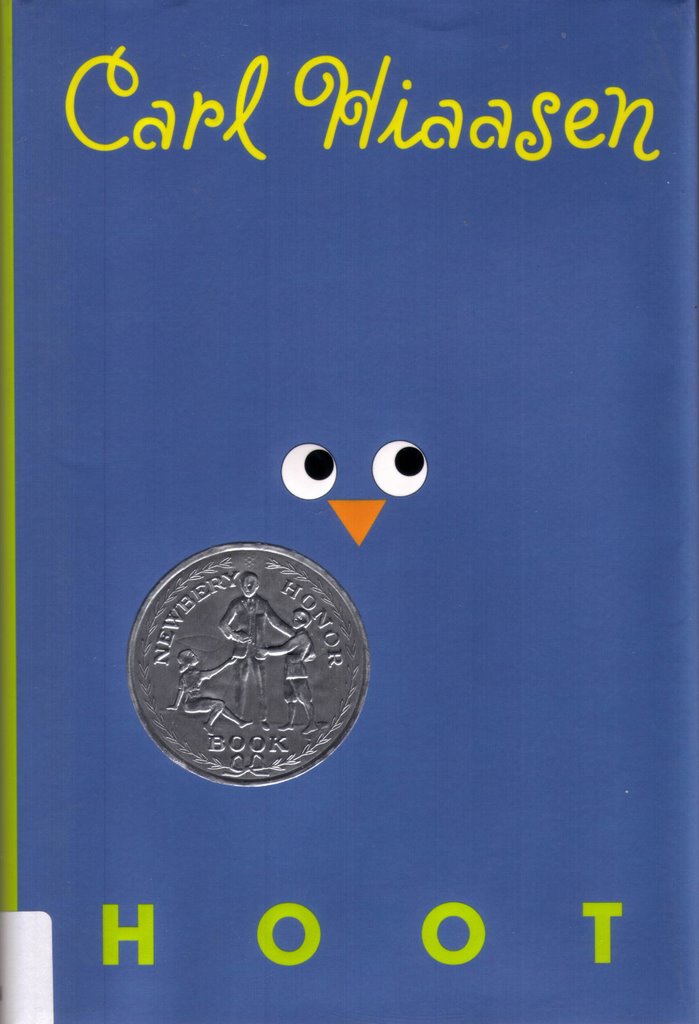
I haven't read anything else by Carl Hiaasen, but this seems very different from his other books. I did see that he has written another young adult book now, and I think Hoot has a movie. Anyway, this was a very fast read and was pretty entertaining. A great young adult novel where kids make a difference. I thought they way they went about it was sometimes questionable. After all, usually I don't see vandalism and violence getting results, but it has a happy ending. I guess if it was all peaceful protest it would be sort of a preachy book. Anyway, it's recommended if you like new kid hero stories.
Friday, August 04, 2006
The Time Traveler's Wife
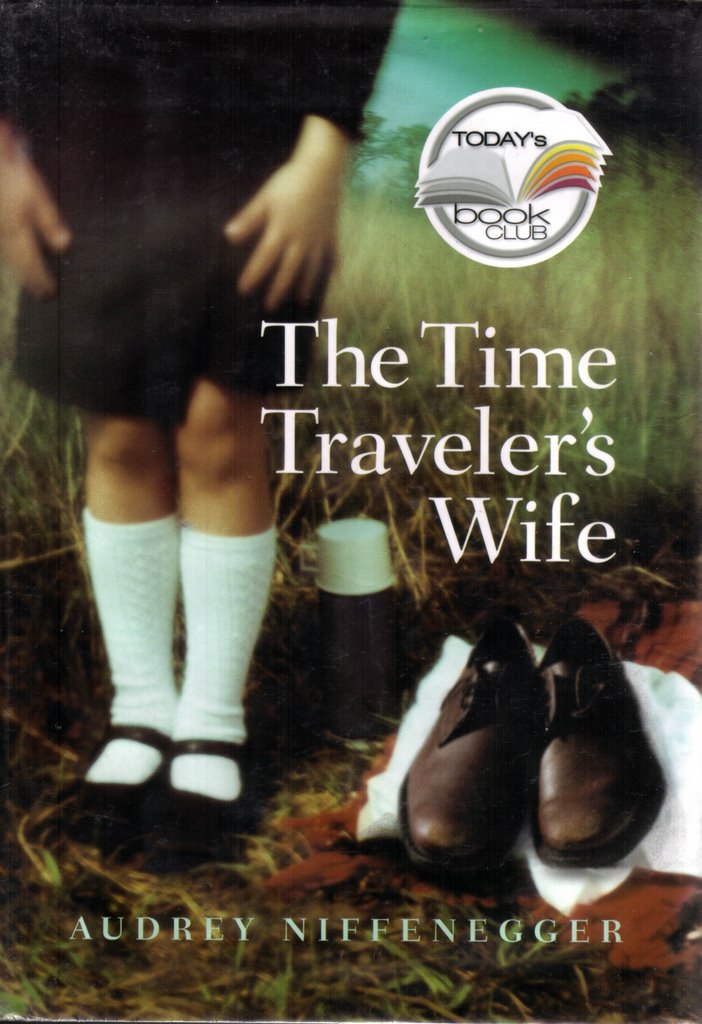
This was one of Pam's book group books that looked good (so many of them do) so I grabbed it at the library. It's a little sci-fi of course...with the time travel element. But it is the kind of sci-fi that is easy to get into and you don't have to learn a whole new language to read it (those of you who have read Dune know what I'm talking about). It's mostly a character driven plot and I love the way the author sort of lets you look at their lives big picture instead of in a linear birth to death sort of way. It very circular and if I were the author I would have a hard time deciding where to start. Here's an excerpt of the main character describing his unusual problem to a friend who's not a friend yet:
"I am a time traveler. At the moment I am thirty-six years old. This afternoon was May 9, 2000. It was a Tuesday. I was at work, I had just finished a Show and tell for a bunch of Caxton Club members and I had gone back to the stacks to reshelve the books when I suddenly found myself on School Street, in 1991. I had the usual problem of getting something to wear. I hid under somebody's porch for a while. I was cold, and nobody was coming along, and finally this young guy, dressed--well, you saw how I was dressed. I mugged him, took his cash and everything he was wearing except his underwear...."
"I find myself in situations like that all the time. No pun intended. There's something wrong with me. I get dislocated in time, for no reason. I can't control it, I never know when it's going to happen, or where and when I'll end up. So in order to cope, I pick locks, shoplift, pick pockets, mug people, panhandle, break and enter, steal cars lie, fold, spindle, and mutilate. You name it, I've done it."
Wednesday, August 02, 2006
The Omnivore's Dilemma
Oh, my, goodness. I'm only 2/3rds of the way through this book and I had to write about it. This is the best book I've read this year.
It's non-fiction and about food production, which may not sound like the most exciting things to some of you, but this guy is great. He's a professor of Journalism at Berkeley and has written about food before (The Botany of Desire).
This is what the publisher says about the book (I can't seem to find an excerpt on line):
"Pollan has divided The Omnivore's Dilemma into three parts, one for each of the food chains that sustain us: industrialized food, alternative or "organic" food, and food people obtain by dint of their own hunting, gathering, or gardening. Pollan follows each food chain literally from the ground up to the table, emphasizing our dynamic coevolutionary relationship with the species we depend on. He concludes each section by sitting down to a meal at McDonald's, at home with his family sharing a dinner from Whole Foods, and in a revolutionary "beyond organic" farm in Virginia. For each meal he traces the provenance of everything consumed, revealing the hidden components we unwittingly ingest and explaining how our taste for particular foods reflects our environmental and biological inheritance."
The great thing about him is that he does not condemn the farmer or the consumer. Yet, he is reminding us to consider what we are eating and where we are shopping and what that implies. Also, he does not admonish the reader for her bad eating habits after he witnesses the industrialized food chain. Pollan does want the reader to acknowledge that the price you pay for your hamburger at the grocery store is more than just the amount of money you hand over.
For those of you who read My Year of Meats or Fast Food Nation (also recommended) this is better. I can't say enough good things about this book, and you should all run out and get it from your library right away. I think I may buy it.
d
It's non-fiction and about food production, which may not sound like the most exciting things to some of you, but this guy is great. He's a professor of Journalism at Berkeley and has written about food before (The Botany of Desire).
This is what the publisher says about the book (I can't seem to find an excerpt on line):
"Pollan has divided The Omnivore's Dilemma into three parts, one for each of the food chains that sustain us: industrialized food, alternative or "organic" food, and food people obtain by dint of their own hunting, gathering, or gardening. Pollan follows each food chain literally from the ground up to the table, emphasizing our dynamic coevolutionary relationship with the species we depend on. He concludes each section by sitting down to a meal at McDonald's, at home with his family sharing a dinner from Whole Foods, and in a revolutionary "beyond organic" farm in Virginia. For each meal he traces the provenance of everything consumed, revealing the hidden components we unwittingly ingest and explaining how our taste for particular foods reflects our environmental and biological inheritance."
The great thing about him is that he does not condemn the farmer or the consumer. Yet, he is reminding us to consider what we are eating and where we are shopping and what that implies. Also, he does not admonish the reader for her bad eating habits after he witnesses the industrialized food chain. Pollan does want the reader to acknowledge that the price you pay for your hamburger at the grocery store is more than just the amount of money you hand over.
For those of you who read My Year of Meats or Fast Food Nation (also recommended) this is better. I can't say enough good things about this book, and you should all run out and get it from your library right away. I think I may buy it.
d
Thursday, July 27, 2006
Austen Mania

I finally got to read the Jane Austen Book Club that Amanda talked about. It was great! I know Amanda already shared but now I am in a total Austen craze so I thought I would share the parts where she talks about everyone's perception of Austen:
"Jocelyn's Austen wrote wonderful novels about love and courtship, but never married."
"Bernadette's Austen was a comic genius. Her characters, her dialogue remained genuinely funny, not like Shakespeare's jokes, which amused you only because they were Shakespeare's and you owed him that."
"Allegra's Austen wrote about the impact of financial need on the intimate lives of women. If she'd worked in a bookstore, Allegra would have shelved Austen in the horror section."
"Prudie's was the Austen whose books changed every time you read them, so that one year they were all romances and the next you suddenly noticed Austen's cool, ironic prose. Prudie's was the Austen who died, possibly of Hodgkin's disease, when she was only forty-one years old."
"Sylvia's Austen was a daughter, a sister, an aunt. Sylvia's Austen wrote her books in a busy sitting room, read them aloud to her family, yet remained an acute and nonpartisan observer of people. Sylvia's Austen could love and be loved, but it didn't cloud her vision, blunt her judgments."
So I've been trying to figure out who my Austen is, but really she is all of those things. Isn't there a famous quote about every woman thinking she personally knows Austen better than everyone else? I looked for it but can't find it.
Sunday, July 23, 2006
Fire and Ice

Ok, so the title is a little bit terrible. But the book was a fast enjoyable read. I got tired of the Kate Shugak character several years ago, but when I saw that there was another series with a different hero I decided to try it. I just got tired of Kate because her character never evolved and nothing ever changed as far as the big timeline. This could happen with the new character, Liam, but I've only read one book so...so far so good. I really enjoy all the Alaska stuff. This book has a very detailed description of fishing for herring and it is really interesting. Fishing is a good career background for characters in a murder mystery. Very tough and competitive. The most appealing part of the story is the characters Dana Stabenow develops for this tiny Alaskan town. She drew me in with the people so I will probably be looking for the second in the series when I go back to the library.
Wednesday, July 19, 2006
Tales of Passion, Tales of Woe

This was another one of Pam's book group books. She recommended it to me and I ended up reading the whole series. I started with this one, which is actually the middle, but it was a good one to start with. It left me with questions for books one and three. The series tells the story of Josephine Bonaparte. Honestly I had very little interest in Napoleon prior to reading this book, but Sandra Gulland paints him as an interesting character. We see him through Josephine as a very opportunistic general who is not anything like emperor material. He is also very arrogant. He carries his own hard-boiled eggs to dinners so that no one can poison him. He even changes her first name from Rose. Josephine is no saint either. She has tons of debts and a weakness for laudanum. Upon telling her aunt she has married:
"Why...that's wonderful," she said, crossing herself, "but to whom?"
"To a military man by the name of Napoleon Bonaparte. He's--"
"What type of name is that?" my aunt demanded, frowning suspiciously.
"It's a Corsican name, Aunt Désirée, and--"
"You married a Corsican?" She reached for a brass bell and rang it vigorously...(she calls for smelling salts and insults the corsicans thoroughly)...
"A church ceremony, Rose?" she asked, pulling and twistingng the green handkerchief, worrying it.
"No," I admitted. Bonaparte was anti-Church, but I wasn't going to tell her that.
I heard a sniff. Oh dear! Was she weeping? Dismayed, I reached out to comfort her, but she turned on me like a hawk. "Rose how could you?" she wept, dabbing her cheeks. "How could you have married a man with such a horrible name!"
Friday, July 14, 2006
Robinson Crusoe
This is another one of those classics that I had been meaning to read for years. Over all it was an excellent book. Especially the first 3 quarters. Or even 5/6ths. But pretty much after he is "rescued" I lost interest. Also, I thought it was really annoying that each chapter begins with a overview of what happens in the chapter. For example "Friday tells me of the white mans in his country. I make a canoe. Keep another anniversary. The savages again land. We attack them and rescue a Spaniard. Friday finds his father." And then the chapter begins. What?! It gives away all the surprises. If I could only stop myself from reading those parts! My only other complaint is the end of the book. The last sentence is: "I sent them also from the Brazils five cows, three of them being big with calf, some sheep, and some hogs; which, when I came again, were considerably increased." So actually there is no ending.
I love the action in this book. It is very exciting and actually reminded me a lot of Fatu-Hiva by Thor Heyerdahl. Although that was a real reminiscence, they dealt with some of the same survival issues. I thought it was really funny the way he ends up describing how he built a canoe in great detail, but when he gets married it isn't really clear who the lucky lady is. I also thought it was funny the way you think through the whole book that he is just unlucky with the sea, but then the first time he travels by land he is attacked by wolves. So I think the moral of the story is: Stay home and listen to your parents. ( at least when they tell you that you are doomed to be lost at sea)
I love the action in this book. It is very exciting and actually reminded me a lot of Fatu-Hiva by Thor Heyerdahl. Although that was a real reminiscence, they dealt with some of the same survival issues. I thought it was really funny the way he ends up describing how he built a canoe in great detail, but when he gets married it isn't really clear who the lucky lady is. I also thought it was funny the way you think through the whole book that he is just unlucky with the sea, but then the first time he travels by land he is attacked by wolves. So I think the moral of the story is: Stay home and listen to your parents. ( at least when they tell you that you are doomed to be lost at sea)
Tuesday, July 11, 2006
Kite Runner
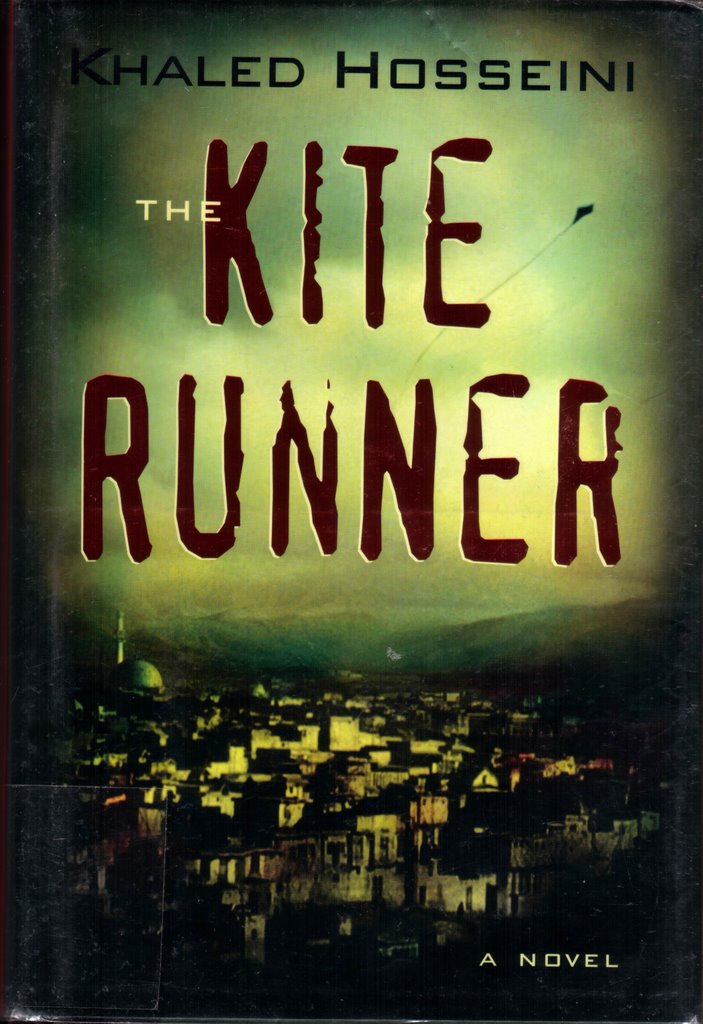
Ok, I won't say much about this one because I'm pretty sure I'm the last person on the planet to read it, but if it turns out someone else out there is the last person then I highly recommend this book. It's about a couple of boys in Afghanistan, so it isn't a cheerful sort of book, but it is very insightful. I learned a lot about the history of the country through this book. This is the way I prefer to learn history I think...through fiction. Anyway, it's well written and deserving of a second look if you get a chance.
Subscribe to:
Posts (Atom)